Buy ausruestung.eu ?
We are moving the project
ausruestung.eu .
Are you interested in purchasing the domain
ausruestung.eu ?
domain@kv-gmbh.de · 0541-91531010
Buy ausruestung.eu ?
What are confidence intervals?
Confidence intervals are a range of values that are used to estimate the true value of a population parameter, such as the mean or proportion. They provide a measure of the uncertainty or variability in the estimate, and are typically expressed as a range of values with a specified level of confidence, such as 95% or 99%. Confidence intervals are calculated using sample data and statistical methods, and are used to make inferences about the population parameter being estimated. They are a useful tool for understanding the precision and reliability of an estimate, and for comparing different groups or treatments in a study. **
What are real number intervals?
Real number intervals are continuous sets of real numbers that lie between two specified values. They can be open intervals, which do not include the endpoint values, or closed intervals, which include the endpoint values. Real number intervals are commonly represented using interval notation, such as (a, b) for an open interval or [a, b] for a closed interval. These intervals are used in mathematics to describe ranges of values or solutions to equations. **


Similar search terms for Intervals
Top-Angebote
Products related to Intervals:
-
All Categories Goods Heavy Duty Metal Rack, 5 Shelf Steel Shelving, Garage Storage Unit For Tools And Equipment Heavy Duty Metal Rack, 5 Shelf Steel Shelving, Garage Storage Unit For Tools And EquipmentLooking for a 5 Shelf Heavy Duty Metal Rack to organize your garage, home, or office This steel shelving unit is the ultimate storage solution, designed to handle heavy loads while keeping your space neat and tidy. Whether you're storing tools,...149,97 $*Shipping: 0,00 $Secure redirect to the provider
-
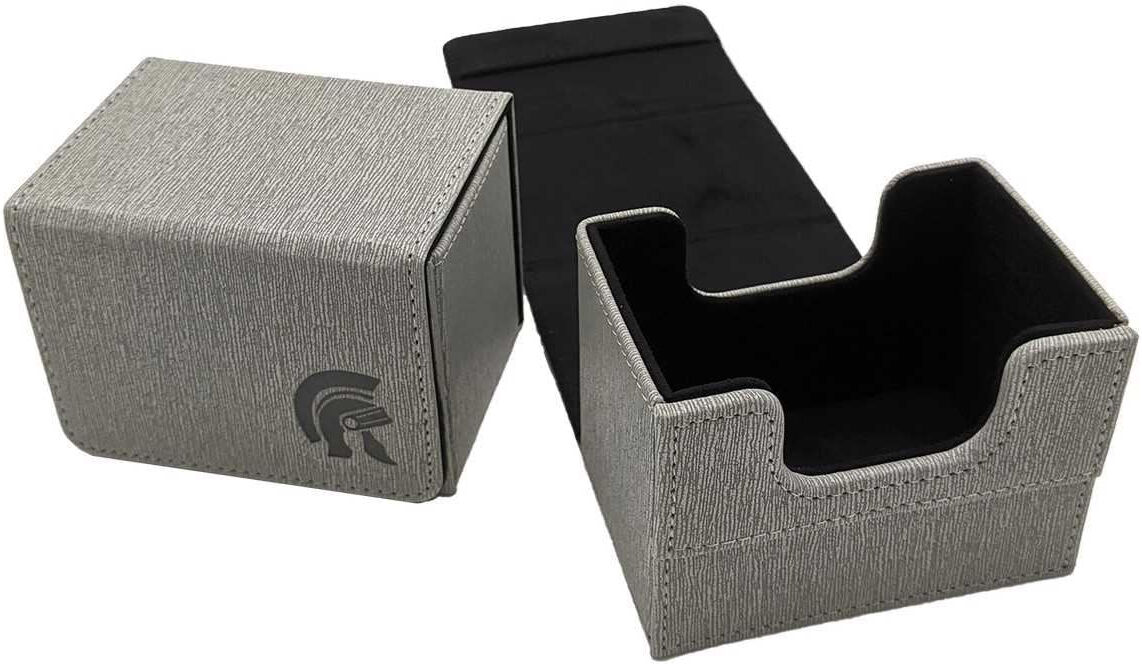
Legion Supplies Legion Sentinel Deck Box 80 - Grey - Card Game AccessoriesProtect your trading card deck with the Legion Sentinel Deck Box 80. This grey deck box is designed to hold up to 80 double-sleeved cards, making it perfect for storing a complete deck and keeping cards together between games or during transport. The durable textured vinyl outer cover provides a sturdy layer of protection, while the soft, smooth interior helps prevent cards and sleeves from catching as they are placed inside or removed. A strong magnetic lid with a stepped closure helps keep the box securely shut and reduces the chance of the lid sliding open. The compact design features easy-grip cut-outs, making it simpler to lift cards from the box when you're ready to play. The Legion Sentinel Deck Box 80 is suitable for tabletop gaming collections, whether used at home, at events, or alongside other deck boxes.15,99 £*Shipping: 3,95 £Secure redirect to the provider
-
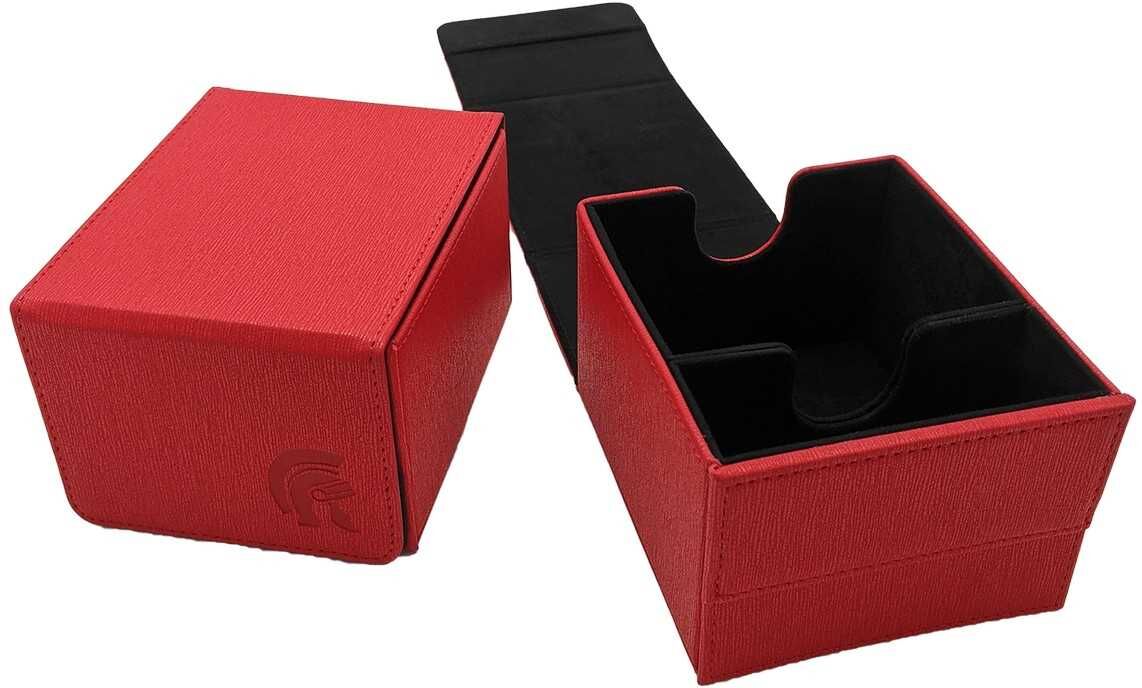
Legion Supplies Legion Sentinel Deck Box 80 - Red - Card Game AccessoriesProtect your card collection with the Legion Sentinel Deck Box 80 in red. This compact deck box is designed for trading card games and other standard-sized card collections, keeping your cards together and protected between games. It holds up to 80 double-sleeved cards, making it suitable for organized play and everyday deck storage. The durable textured vinyl exterior is designed for regular handling, while the soft, smooth interior helps prevent snagging on card sleeves. A strong magnetic lid with a stepped closure ensures the box stays shut, and easy-grip cut-outs provide convenient card access. The compact format makes it easy to store and transport your deck, and the red finish makes it easy to identify in a collection.15,99 £*Shipping: 3,95 £Secure redirect to the provider


-
How can one remember intervals?
One way to remember intervals is to associate them with familiar songs or melodies. For example, a perfect fourth interval is the first two notes of "Here Comes the Bride." Another method is to visualize the distance between the notes on a piano or other instrument. Practice playing and listening to intervals regularly to reinforce your memory of them. Additionally, using mnemonic devices or creating flashcards with interval names and examples can help solidify your understanding and retention of intervals. **
-
Wanted: Explanation of music intervals.
Music intervals are the distance between two pitches. They are named based on the number of letter names they encompass, such as a second, third, fourth, etc. Intervals can be classified as either harmonic (played simultaneously) or melodic (played consecutively). Understanding intervals is crucial in music theory as they help musicians identify and create melodies, harmonies, and chords. **
-
How do you hear intervals?
Intervals are heard by recognizing the distance between two notes in terms of pitch. This can be done by comparing the two notes and identifying whether the second note is higher, lower, or the same pitch as the first note. The quality of the interval (such as major, minor, perfect, etc.) can also be determined by listening to the specific sound created by the two notes played together. Training your ear through practice and exposure to different intervals can help in accurately identifying and hearing intervals. **
-
How intense are music intervals?
Music intervals can vary in intensity depending on their size and the context in which they are used. Smaller intervals, such as minor and major seconds, can create a sense of tension and dissonance, while larger intervals, such as perfect fifths and octaves, can create a feeling of stability and resolution. The intensity of music intervals is also influenced by factors such as dynamics, articulation, and the overall musical texture. Ultimately, the intensity of music intervals is subjective and can be perceived differently by different listeners. **


What are intervals in mathematics?
In mathematics, an interval is a set of real numbers with the property that any number that lies between two numbers in the set is also included in the set. Intervals can be open, closed, or a combination of both, and they can be bounded or unbounded. For example, the interval [a, b] includes all real numbers x such that a ≤ x ≤ b, while the interval (a, b) includes all real numbers x such that a < x < b. Intervals are used in various mathematical contexts, such as in calculus, analysis, and inequalities. **
How can one reduce measurement data in Excel from 15-minute intervals to hourly intervals?
To reduce measurement data in Excel from 15-minute intervals to hourly intervals, you can use the AVERAGE function. First, create a new column next to your original data. Then, use the AVERAGE function to calculate the average value for every four 15-minute intervals to get the hourly average. Drag the formula down to apply it to all the data points, and you will have your data reduced to hourly intervals. **
Top-Angebote
Products related to Intervals:
-
All Categories Goods Heavy Duty Metal Rack, 5 Shelf Steel Shelving, Garage Storage Unit For Tools And Equipment Heavy Duty Metal Rack, 5 Shelf Steel Shelving, Garage Storage Unit For Tools And EquipmentLooking for a 5 Shelf Heavy Duty Metal Rack to organize your garage, home, or office This steel shelving unit is the ultimate storage solution, designed to handle heavy loads while keeping your space neat and tidy. Whether you're storing tools,...149,97 $*Shipping: 0,00 $Secure redirect to the provider
-
What are confidence intervals?
Confidence intervals are a range of values that are used to estimate the true value of a population parameter, such as the mean or proportion. They provide a measure of the uncertainty or variability in the estimate, and are typically expressed as a range of values with a specified level of confidence, such as 95% or 99%. Confidence intervals are calculated using sample data and statistical methods, and are used to make inferences about the population parameter being estimated. They are a useful tool for understanding the precision and reliability of an estimate, and for comparing different groups or treatments in a study. **
-
What are real number intervals?
Real number intervals are continuous sets of real numbers that lie between two specified values. They can be open intervals, which do not include the endpoint values, or closed intervals, which include the endpoint values. Real number intervals are commonly represented using interval notation, such as (a, b) for an open interval or [a, b] for a closed interval. These intervals are used in mathematics to describe ranges of values or solutions to equations. **
-
How can one remember intervals?
One way to remember intervals is to associate them with familiar songs or melodies. For example, a perfect fourth interval is the first two notes of "Here Comes the Bride." Another method is to visualize the distance between the notes on a piano or other instrument. Practice playing and listening to intervals regularly to reinforce your memory of them. Additionally, using mnemonic devices or creating flashcards with interval names and examples can help solidify your understanding and retention of intervals. **
-
Wanted: Explanation of music intervals.
Music intervals are the distance between two pitches. They are named based on the number of letter names they encompass, such as a second, third, fourth, etc. Intervals can be classified as either harmonic (played simultaneously) or melodic (played consecutively). Understanding intervals is crucial in music theory as they help musicians identify and create melodies, harmonies, and chords. **
Similar search terms for Intervals
-
Legion Supplies Legion Sentinel Deck Box 80 - Grey - Card Game AccessoriesProtect your trading card deck with the Legion Sentinel Deck Box 80. This grey deck box is designed to hold up to 80 double-sleeved cards, making it perfect for storing a complete deck and keeping cards together between games or during transport. The durable textured vinyl outer cover provides a sturdy layer of protection, while the soft, smooth interior helps prevent cards and sleeves from catching as they are placed inside or removed. A strong magnetic lid with a stepped closure helps keep the box securely shut and reduces the chance of the lid sliding open. The compact design features easy-grip cut-outs, making it simpler to lift cards from the box when you're ready to play. The Legion Sentinel Deck Box 80 is suitable for tabletop gaming collections, whether used at home, at events, or alongside other deck boxes.15,99 £*Shipping: 3,95 £Secure redirect to the provider
-
Legion Supplies Legion Sentinel Deck Box 80 - Red - Card Game AccessoriesProtect your card collection with the Legion Sentinel Deck Box 80 in red. This compact deck box is designed for trading card games and other standard-sized card collections, keeping your cards together and protected between games. It holds up to 80 double-sleeved cards, making it suitable for organized play and everyday deck storage. The durable textured vinyl exterior is designed for regular handling, while the soft, smooth interior helps prevent snagging on card sleeves. A strong magnetic lid with a stepped closure ensures the box stays shut, and easy-grip cut-outs provide convenient card access. The compact format makes it easy to store and transport your deck, and the red finish makes it easy to identify in a collection.15,99 £*Shipping: 3,95 £Secure redirect to the provider
-
Legion Supplies Legion Sentinel Deck Box 80 - Green - Card Game AccessoriesProtect your trading-card deck with the Legion Sentinel Deck Box 80 in green. Its durable textured vinyl exterior helps shield cards from everyday knocks while the soft interior is gentle on cards and sleeves. Holds up to 80 double-sleeved cards for organized play. Magnetic lid with stepped closure keeps the box securely shut. Wraparound design provides protection around the deck. Easy-grip cut-outs at the front for quick card access.15,99 £*Shipping: 3,95 £Secure redirect to the provider
-
Legion Supplies Legion Sentinel Deck Box 100 - Grey - Card Game AccessoriesProtect your trading card deck with the Legion Sentinel Deck Box 100 in grey. This durable deck box combines a textured vinyl exterior with a smooth interior to help protect card sleeves during storage and handling. It can hold up to 100 double-sleeved cards, making it suitable for many standard-sized trading card decks. The magnetic lid features a stepped closure to prevent the cover from sliding open, while the front cut-outs provide a firm grip when removing your deck. The compact format allows for organised deck storage, making it a practical choice for protecting a frequently played deck at home, during events, or while travelling.17,99 £*Shipping: 3,95 £Secure redirect to the provider
-
How do you hear intervals?
Intervals are heard by recognizing the distance between two notes in terms of pitch. This can be done by comparing the two notes and identifying whether the second note is higher, lower, or the same pitch as the first note. The quality of the interval (such as major, minor, perfect, etc.) can also be determined by listening to the specific sound created by the two notes played together. Training your ear through practice and exposure to different intervals can help in accurately identifying and hearing intervals. **
-
How intense are music intervals?
Music intervals can vary in intensity depending on their size and the context in which they are used. Smaller intervals, such as minor and major seconds, can create a sense of tension and dissonance, while larger intervals, such as perfect fifths and octaves, can create a feeling of stability and resolution. The intensity of music intervals is also influenced by factors such as dynamics, articulation, and the overall musical texture. Ultimately, the intensity of music intervals is subjective and can be perceived differently by different listeners. **
-
What are intervals in mathematics?
In mathematics, an interval is a set of real numbers with the property that any number that lies between two numbers in the set is also included in the set. Intervals can be open, closed, or a combination of both, and they can be bounded or unbounded. For example, the interval [a, b] includes all real numbers x such that a ≤ x ≤ b, while the interval (a, b) includes all real numbers x such that a < x < b. Intervals are used in various mathematical contexts, such as in calculus, analysis, and inequalities. **
-
How can one reduce measurement data in Excel from 15-minute intervals to hourly intervals?
To reduce measurement data in Excel from 15-minute intervals to hourly intervals, you can use the AVERAGE function. First, create a new column next to your original data. Then, use the AVERAGE function to calculate the average value for every four 15-minute intervals to get the hourly average. Drag the formula down to apply it to all the data points, and you will have your data reduced to hourly intervals. **
* All prices are inclusive of VAT and, if applicable, plus shipping costs. The offer information is based on the details provided by the respective shop and is updated through automated processes. Real-time updates do not occur, so deviations can occur in individual cases. ** Note: Parts of this content were created by AI.