Buy ausruestung.eu ?
We are moving the project
ausruestung.eu .
Are you interested in purchasing the domain
ausruestung.eu ?
domain@kv-gmbh.de · 0541-91531010
Buy ausruestung.eu ?
How is a covalent bond formed when nonmetal atoms meet nonmetal atoms?
When nonmetal atoms meet nonmetal atoms, they can form covalent bonds by sharing electrons. Each nonmetal atom contributes one or more electrons to the bond, creating a shared electron pair between the two atoms. This sharing of electrons allows both atoms to achieve a more stable electron configuration, typically by filling their outermost energy levels. The strength of the covalent bond depends on the number of shared electrons and the distance between the nuclei of the bonded atoms. **
How does a nonmetal react with oxygen?
Nonmetals typically react with oxygen to form oxides. This reaction can be highly exothermic, meaning it releases a significant amount of heat. For example, when sulfur reacts with oxygen, it forms sulfur dioxide. Nonmetals generally have a high affinity for oxygen, and the resulting oxides can have a variety of properties, such as being acidic or basic. Overall, the reaction of nonmetals with oxygen is an important aspect of chemical reactivity and plays a role in various natural and industrial processes. **


Similar search terms for Nonmetal
Top-Angebote
Products related to Nonmetal:
-
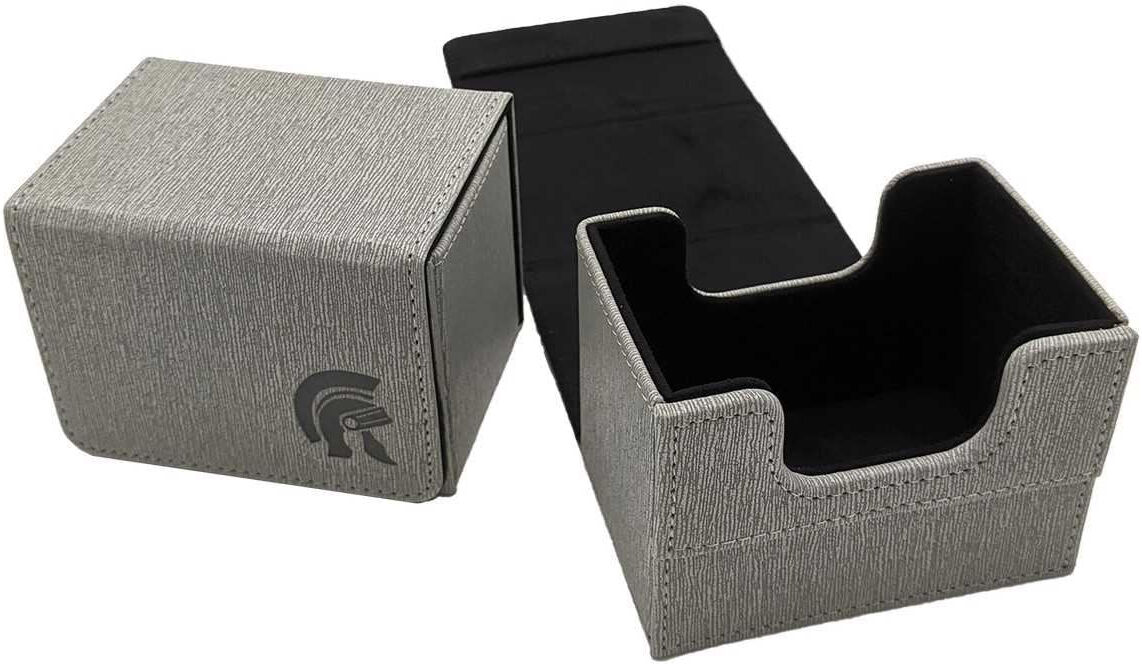
Legion Supplies Legion Sentinel Deck Box 80 - Grey - Card Game AccessoriesProtect your trading card deck with the Legion Sentinel Deck Box 80. This grey deck box is designed to hold up to 80 double-sleeved cards, making it perfect for storing a complete deck and keeping cards together between games or during transport. The durable textured vinyl outer cover provides a sturdy layer of protection, while the soft, smooth interior helps prevent cards and sleeves from catching as they are placed inside or removed. A strong magnetic lid with a stepped closure helps keep the box securely shut and reduces the chance of the lid sliding open. The compact design features easy-grip cut-outs, making it simpler to lift cards from the box when you're ready to play. The Legion Sentinel Deck Box 80 is suitable for tabletop gaming collections, whether used at home, at events, or alongside other deck boxes.15,99 £*Shipping: 3,95 £Secure redirect to the provider
-
Legion Supplies Legion Sentinel Deck Box 80 - Red - Card Game AccessoriesProtect your card collection with the Legion Sentinel Deck Box 80 in red. This compact deck box is designed for trading card games and other standard-sized card collections, keeping your cards together and protected between games. It holds up to 80 double-sleeved cards, making it suitable for organized play and everyday deck storage. The durable textured vinyl exterior is designed for regular handling, while the soft, smooth interior helps prevent snagging on card sleeves. A strong magnetic lid with a stepped closure ensures the box stays shut, and easy-grip cut-outs provide convenient card access. The compact format makes it easy to store and transport your deck, and the red finish makes it easy to identify in a collection.15,99 £*Shipping: 3,95 £Secure redirect to the provider
-
Legion Supplies Legion Sentinel Deck Box 80 - Green - Card Game AccessoriesProtect your trading-card deck with the Legion Sentinel Deck Box 80 in green. Its durable textured vinyl exterior helps shield cards from everyday knocks while the soft interior is gentle on cards and sleeves. Holds up to 80 double-sleeved cards for organized play. Magnetic lid with stepped closure keeps the box securely shut. Wraparound design provides protection around the deck. Easy-grip cut-outs at the front for quick card access.15,99 £*Shipping: 3,95 £Secure redirect to the provider



-
How do you write formulas for nonmetal oxides?
To write formulas for nonmetal oxides, you need to first identify the nonmetal element present in the oxide. Then, determine the oxidation number of the nonmetal element. Finally, write the formula by balancing the charges of the nonmetal element and oxygen. For example, the formula for carbon dioxide (CO2) is written by balancing the +4 oxidation number of carbon with the -2 oxidation number of oxygen. **
-
How can one recognize if an element is a nonmetal?
Nonmetals can be recognized by several characteristics. They are typically located on the right side of the periodic table, are poor conductors of heat and electricity, and have dull or non-shiny appearances. Nonmetals also tend to have lower melting and boiling points compared to metals. Additionally, they often form negative ions when they react with metals. **
-
What are the properties of metal oxides and nonmetal oxides?
Metal oxides are typically basic in nature, meaning they react with acids to form salts and water. They are also typically solid at room temperature and have high melting and boiling points. Nonmetal oxides, on the other hand, are usually acidic in nature, meaning they react with bases to form salts and water. They are often gases or liquids at room temperature and have lower melting and boiling points compared to metal oxides. Both types of oxides play important roles in various chemical reactions and industrial processes. **
-
What are the differences between metal oxides and nonmetal oxides?
Metal oxides are compounds formed between a metal and oxygen, while nonmetal oxides are compounds formed between a nonmetal and oxygen. Metal oxides tend to be basic in nature, meaning they react with acids to form salts and water. Nonmetal oxides, on the other hand, tend to be acidic in nature, meaning they react with bases to form salts and water. Additionally, metal oxides typically have higher melting and boiling points compared to nonmetal oxides. **


Ionic bonding always occurs between a metal and a nonmetal.
Ionic bonding always occurs between a metal and a nonmetal because of the large difference in electronegativity between the two types of elements. Metals have low electronegativity and tend to lose electrons, while nonmetals have high electronen **
What is an electron transfer reaction between a metal and a nonmetal?
An electron transfer reaction between a metal and a nonmetal occurs when the metal atom loses one or more electrons to the nonmetal atom. This transfer of electrons results in the formation of ions, with the metal forming a positively charged ion (cation) and the nonmetal forming a negatively charged ion (anion). This type of reaction is characteristic of ionic bonding, where the attraction between the oppositely charged ions leads to the formation of an ionic compound. Examples of such reactions include the formation of sodium chloride (NaCl) when sodium (a metal) reacts with chlorine (a nonmetal). **
Top-Angebote
Products related to Nonmetal:
-
Legion Supplies Legion Sentinel Deck Box 80 - Grey - Card Game AccessoriesProtect your trading card deck with the Legion Sentinel Deck Box 80. This grey deck box is designed to hold up to 80 double-sleeved cards, making it perfect for storing a complete deck and keeping cards together between games or during transport. The durable textured vinyl outer cover provides a sturdy layer of protection, while the soft, smooth interior helps prevent cards and sleeves from catching as they are placed inside or removed. A strong magnetic lid with a stepped closure helps keep the box securely shut and reduces the chance of the lid sliding open. The compact design features easy-grip cut-outs, making it simpler to lift cards from the box when you're ready to play. The Legion Sentinel Deck Box 80 is suitable for tabletop gaming collections, whether used at home, at events, or alongside other deck boxes.15,99 £*Shipping: 3,95 £Secure redirect to the provider
-
How is a covalent bond formed when nonmetal atoms meet nonmetal atoms?
When nonmetal atoms meet nonmetal atoms, they can form covalent bonds by sharing electrons. Each nonmetal atom contributes one or more electrons to the bond, creating a shared electron pair between the two atoms. This sharing of electrons allows both atoms to achieve a more stable electron configuration, typically by filling their outermost energy levels. The strength of the covalent bond depends on the number of shared electrons and the distance between the nuclei of the bonded atoms. **
-
How does a nonmetal react with oxygen?
Nonmetals typically react with oxygen to form oxides. This reaction can be highly exothermic, meaning it releases a significant amount of heat. For example, when sulfur reacts with oxygen, it forms sulfur dioxide. Nonmetals generally have a high affinity for oxygen, and the resulting oxides can have a variety of properties, such as being acidic or basic. Overall, the reaction of nonmetals with oxygen is an important aspect of chemical reactivity and plays a role in various natural and industrial processes. **
-
How do you write formulas for nonmetal oxides?
To write formulas for nonmetal oxides, you need to first identify the nonmetal element present in the oxide. Then, determine the oxidation number of the nonmetal element. Finally, write the formula by balancing the charges of the nonmetal element and oxygen. For example, the formula for carbon dioxide (CO2) is written by balancing the +4 oxidation number of carbon with the -2 oxidation number of oxygen. **
-
How can one recognize if an element is a nonmetal?
Nonmetals can be recognized by several characteristics. They are typically located on the right side of the periodic table, are poor conductors of heat and electricity, and have dull or non-shiny appearances. Nonmetals also tend to have lower melting and boiling points compared to metals. Additionally, they often form negative ions when they react with metals. **
Similar search terms for Nonmetal
-
Legion Supplies Legion Sentinel Deck Box 80 - Red - Card Game AccessoriesProtect your card collection with the Legion Sentinel Deck Box 80 in red. This compact deck box is designed for trading card games and other standard-sized card collections, keeping your cards together and protected between games. It holds up to 80 double-sleeved cards, making it suitable for organized play and everyday deck storage. The durable textured vinyl exterior is designed for regular handling, while the soft, smooth interior helps prevent snagging on card sleeves. A strong magnetic lid with a stepped closure ensures the box stays shut, and easy-grip cut-outs provide convenient card access. The compact format makes it easy to store and transport your deck, and the red finish makes it easy to identify in a collection.15,99 £*Shipping: 3,95 £Secure redirect to the provider
-
Legion Supplies Legion Sentinel Deck Box 80 - Green - Card Game AccessoriesProtect your trading-card deck with the Legion Sentinel Deck Box 80 in green. Its durable textured vinyl exterior helps shield cards from everyday knocks while the soft interior is gentle on cards and sleeves. Holds up to 80 double-sleeved cards for organized play. Magnetic lid with stepped closure keeps the box securely shut. Wraparound design provides protection around the deck. Easy-grip cut-outs at the front for quick card access.15,99 £*Shipping: 3,95 £Secure redirect to the provider
-
Legion Supplies Legion Sentinel Deck Box 100 - Grey - Card Game AccessoriesProtect your trading card deck with the Legion Sentinel Deck Box 100 in grey. This durable deck box combines a textured vinyl exterior with a smooth interior to help protect card sleeves during storage and handling. It can hold up to 100 double-sleeved cards, making it suitable for many standard-sized trading card decks. The magnetic lid features a stepped closure to prevent the cover from sliding open, while the front cut-outs provide a firm grip when removing your deck. The compact format allows for organised deck storage, making it a practical choice for protecting a frequently played deck at home, during events, or while travelling.17,99 £*Shipping: 3,95 £Secure redirect to the provider
-
Legion Supplies Legion Sentinel Deck Box 130 - Blue Card Game AccessoriesProtect your carefully built deck with the Legion Sentinel Deck Box 130. This blue deck box is designed for card players, providing a secure home for sleeved cards while keeping accessories close at hand. It holds up to 130 double-sleeved cards, or up to 100 cards with a separate tray for dice, tokens, and other gaming essentials. The durable textured vinyl exterior is designed for everyday handling, while the soft, smooth interior helps protect card sleeves from snagging. A practical magnetic closure keeps the box shut during storage and transport, and easy-grip cut-outs make it simpler to remove cards when you're ready to play.21,99 £*Shipping: 3,95 £Secure redirect to the provider
-
What are the properties of metal oxides and nonmetal oxides?
Metal oxides are typically basic in nature, meaning they react with acids to form salts and water. They are also typically solid at room temperature and have high melting and boiling points. Nonmetal oxides, on the other hand, are usually acidic in nature, meaning they react with bases to form salts and water. They are often gases or liquids at room temperature and have lower melting and boiling points compared to metal oxides. Both types of oxides play important roles in various chemical reactions and industrial processes. **
-
What are the differences between metal oxides and nonmetal oxides?
Metal oxides are compounds formed between a metal and oxygen, while nonmetal oxides are compounds formed between a nonmetal and oxygen. Metal oxides tend to be basic in nature, meaning they react with acids to form salts and water. Nonmetal oxides, on the other hand, tend to be acidic in nature, meaning they react with bases to form salts and water. Additionally, metal oxides typically have higher melting and boiling points compared to nonmetal oxides. **
-
Ionic bonding always occurs between a metal and a nonmetal.
Ionic bonding always occurs between a metal and a nonmetal because of the large difference in electronegativity between the two types of elements. Metals have low electronegativity and tend to lose electrons, while nonmetals have high electronen **
-
What is an electron transfer reaction between a metal and a nonmetal?
An electron transfer reaction between a metal and a nonmetal occurs when the metal atom loses one or more electrons to the nonmetal atom. This transfer of electrons results in the formation of ions, with the metal forming a positively charged ion (cation) and the nonmetal forming a negatively charged ion (anion). This type of reaction is characteristic of ionic bonding, where the attraction between the oppositely charged ions leads to the formation of an ionic compound. Examples of such reactions include the formation of sodium chloride (NaCl) when sodium (a metal) reacts with chlorine (a nonmetal). **
* All prices are inclusive of VAT and, if applicable, plus shipping costs. The offer information is based on the details provided by the respective shop and is updated through automated processes. Real-time updates do not occur, so deviations can occur in individual cases. ** Note: Parts of this content were created by AI.